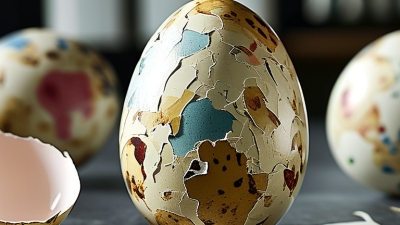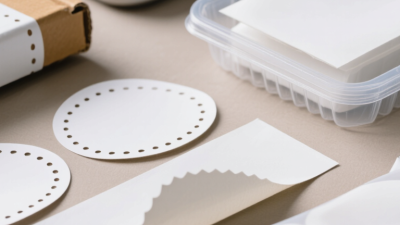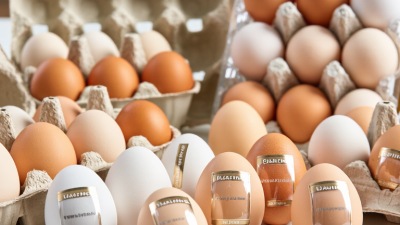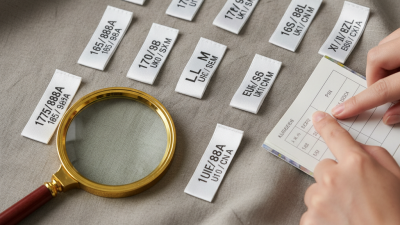
What Is an Eggshell Sticker and How Does It Work? This guide examines the small label with a surprisingly stubborn purpose. An Eggshell Sticker is made from a fragile, destructible material. It looks ordinary on a laptop, carton, device, or sealed package. Try removing it, however, and the surface breaks into tiny flakes instead of lifting cleanly.
Label-industry expert Michael Fairley describes the principle clearly: “A label is part of the product experience, not merely decoration.” That idea matters here. The sticker does more than display a logo or serial number. It can show whether someone has disturbed a covered screw, opened a package, or moved a security seal. The evidence is visible.
The material does the work.
Manufacturers usually combine a brittle face stock with strong pressure-sensitive adhesive. Once applied, the adhesive bonds with the surface. When someone pulls the label, the thin material cracks before it can be removed as one piece. A clean-looking replacement becomes difficult to create. Still, this protection is not magic. Heat, solvents, rough surfaces, or poor application may weaken performance. That deserves honest attention.
A reliable result begins with a clean, dry surface. Apply steady pressure across the entire label. Then test the sticker under realistic conditions, including moisture, handling, and temperature changes. Some users expect an Eggshell Sticker to prevent every form of tampering. It cannot. Its real value is simple: it creates visible evidence when interference occurs. Sometimes, that evidence is imperfect. Yet imperfect evidence can still support better inventory control, warranty checks, and product accountability.
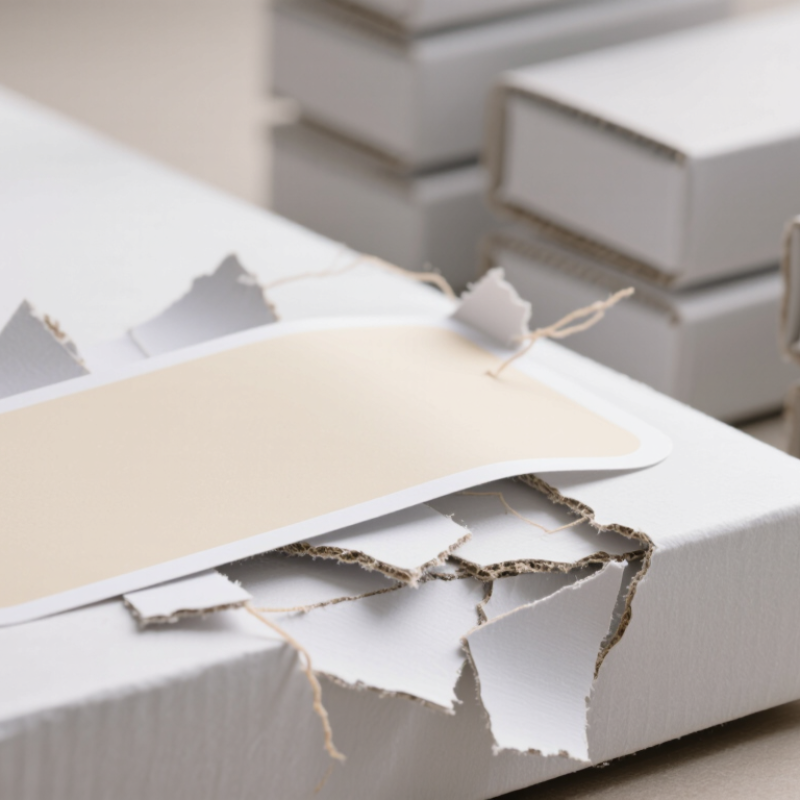
An eggshell sticker is a security label made from destructible vinyl. Its typical vinyl thickness ranges from 50 to 70 μm. This material is thin, brittle, and designed to break during removal. Unlike ordinary removable labels, it cannot usually be lifted in one clean piece. Small flakes remain attached to the surface.
The label combines brittle vinyl with a pressure-sensitive adhesive. When someone pulls an applied label, stress spreads through the film. The vinyl cracks into irregular fragments before the adhesive releases completely. A printed serial number, date, or inspection mark then becomes difficult to reuse. This feature supports tamper evidence on cartons, equipment panels, document folders, and access points.
Surface preparation affects performance. Dust, oil, moisture, and rough coatings can weaken adhesion. A clean, dry, smooth surface usually provides more reliable results. Application pressure also matters; pressing the label firmly helps the adhesive contact the surface. Temperature can change handling and bonding behavior. Very cold conditions may make the film more fragile, while heat can soften adhesive layers.
One detail is easy to overlook. The 50–70 μm figure often describes the vinyl film, not the complete label construction. Ink, adhesive, and liner can increase total thickness. Specifications should be checked before production.
Eggshell labels are not a perfect solution. Poor application can create false concerns, and determined handling may still damage the marked surface. Their value comes from visible evidence of disturbance, not from preventing every attempt at removal.
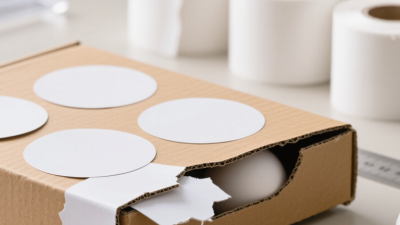
What Is an Eggshell Sticker and How Does It Work?
An eggshell sticker uses a fragile film, acrylic adhesive, and tamper-evident layers. The film resembles a thin eggshell. It breaks into tiny flakes during removal. The acrylic adhesive bonds firmly to smooth surfaces, including coated metal, plastic, and glass. Its strength depends on surface cleanliness, pressure, temperature, and curing time.
A typical structure includes a printed face film, a destructible layer, adhesive, and sometimes a residue layer. When someone lifts the sticker, the fragile film fractures instead of peeling cleanly. The exposed surface shows missing pieces, scattered fragments, or a visible warning pattern. Smithers’ 2024 security-printing report valued the global sector at roughly US$35 billion in 2023. It also identified authentication and traceability as major growth drivers. That figure does not prove every label prevents tampering. It shows the wider demand for visible security controls.
Tips: Clean the surface with isopropyl alcohol, then let it dry completely. Apply firm, even pressure across the sticker. Test removal after 24 hours. Humidity can reduce adhesion. I would not describe eggshell labels as unbreakable. Poor application, dusty surfaces, or sharp tools can weaken their evidence. For important packaging, combine the sticker with serial numbering, controlled records, and routine inspection.
| Material or Feature | Typical Structure or Value | Primary Function | How It Supports Tamper Evidence | Important Performance Factors |
|---|---|---|---|---|
| Printable Face Layer | Thin paper, polyester, or coated film; commonly about 20–80 micrometres for film facestocks | Provides the visible surface for variable data, serial numbers, instructions, or security graphics | Can carry a unique identifier that becomes difficult to reuse after the sticker is damaged or removed | Print receptivity, opacity, dimensional stability, and resistance to abrasion or moisture |
| Fragile Eggshell Film | Brittle or highly destructible film designed to fragment during removal | Creates the characteristic “eggshell” effect and prevents clean removal in one piece | Breaks into small pieces, cracks, or leaves visible fragments when someone attempts to lift it | Film brittleness, thickness, temperature, surface energy, and the bond strength of the adhesive |
| Acrylic Pressure-Sensitive Adhesive | Water-based or solvent-based acrylic adhesive; applied as a thin continuous coating | Bonds the label to glass, coated metal, plastic, painted surfaces, or other substrates when pressure is applied | Maintains a strong bond so that removal damages the fragile face layer instead of allowing a clean lift | Peel adhesion, shear resistance, tack, curing condition, substrate cleanliness, and environmental exposure |
| Tamper-Evident Message Layer | Hidden text, void pattern, checkerboard pattern, or contrasting residue beneath the label | Provides a visual indication that the sticker has been lifted, peeled, or disturbed | Reveals a permanent message or pattern, or transfers part of the label to the protected surface | Contrast, legibility, resistance to solvent manipulation, and consistency across the label area |
| Release Liner | Silicone-coated paper or film backing used before application | Protects the adhesive during storage and enables controlled die-cutting and dispensing | Does not normally remain on the finished product; correct liner release helps preserve the label structure before use | Release force, liner caliper, humidity resistance, flatness, and compatibility with the adhesive |
| Tamper-Evident Mechanism | Destructible construction, void transfer, residue transfer, or a combination of these methods | Converts an attempted removal into a visible and usually irreversible change | Shows cracking, fragmentation, exposed graphics, adhesive residue, or partial delamination | Irreversibility, visibility, resistance to reapplication, and suitability for the target surface |
| Substrate Compatibility | Commonly evaluated on smooth glass, painted metal, rigid plastics, and coated boards | Determines whether the sticker adheres consistently and performs as designed | A clean, well-bonded interface makes unauthorized removal more likely to damage the sticker | Surface roughness, dust, oil, plasticizers, coating type, curvature, and surface energy |
| Application Pressure | Firm, even pressure is required across the entire label area; exact pressure depends on the adhesive system | Promotes wet-out and removes small air gaps between adhesive and substrate | Improves bond development and reduces the chance of lifting an edge without visible damage | Application roller or squeegee, contact time, surface temperature, and edge sealing |
| Bond Development | Acrylic adhesive generally gains adhesion over time after application | Allows the adhesive to conform to microscopic surface irregularities | As the bond develops, removal is more likely to fracture the eggshell film or expose the tamper message | Dwell time, temperature, humidity, adhesive formulation, and substrate cleanliness |
| Removal Response | Fragmentation, cracking, delamination, visible residue, or exposed hidden graphics | Creates a clear physical record of attempted removal | A damaged sticker cannot normally be returned to its original appearance without evidence of interference | Peel angle, peel speed, temperature, tool use, adhesive aging, and surface condition |
| Environmental Considerations | Performance varies with temperature, humidity, ultraviolet exposure, chemicals, and outdoor weathering | Determines service life and the readability of printed or hidden security features | Correct environmental selection helps prevent premature failure that could be mistaken for tampering | Recommended service temperature, moisture resistance, UV stability, chemical resistance, and storage conditions |
| Verification Method | Visual inspection, peel testing, shear testing, aging tests, and substrate-specific trials | Confirms that the sticker remains functional under expected handling and storage conditions | Tests whether attempted removal produces a consistent and readily recognizable indication | Test surface, dwell time, peel rate, temperature, humidity, and acceptance criteria |
Note: Values and constructions are typical industry ranges and may vary according to the adhesive formulation, facestock, security pattern, substrate, and intended service environment.
An eggshell sticker is a fragile security label designed to break when someone attempts removal. Its surface resembles a thin eggshell, so peeling usually causes visible cracking or flaking. This damage can reveal interference without requiring special equipment. The label works best when its adhesive bonds fully with a clean, stable surface.
Begin by wiping the surface with a lint-free cloth and a suitable cleaning solution. Remove dust, grease, moisture, and old adhesive completely. Let the area dry before applying the sticker. Avoid touching the adhesive side, since skin oils can weaken the bond.
Press from the center outward, then hold the label firmly for several seconds. Do not reposition it after contact.
Full adhesion may require 24–72 hours, depending on temperature, humidity, and surface texture. A label can feel attached before its bond is fully developed. Smooth metal and coated surfaces often perform better than dusty plastic or rough cardboard. In practice, installation conditions are easy to underestimate. Testing one spare label first can prevent disappointing results.
Tips: Apply labels above 10°C when possible. Avoid wet or freshly painted surfaces. Mark the installation time for accurate checking. Inspect edges after 24 hours, but do not pull them to test adhesion. If an edge lifts naturally, review the cleaning step before blaming the material.
An eggshell sticker is a brittle, tamper-evident label designed to break during removal. Its adhesive grips the surface, while the thin face layer fragments into irregular pieces. A clean lift should be unlikely. That is the point.
During package inspection, removal attempts may leave a cracked mosaic, scattered flakes, or partial lettering on the container. Angled light can reveal fine fractures around corners and under fingernails. The pattern matters because it records pressure, peeling direction, and repeated attempts. ISO 21976:2018 recommends evaluating tamper-verification features under controlled conditions, including application, removal, and visual inspection.
The commercial need is substantial. The OECD and EUIPO reported that counterfeit and pirated goods represented up to 2.5% of global trade, worth about 464 billion dollars in 2019. WHO’s 2017–2021 surveillance report also recorded more than 1,500 incidents involving substandard or falsified medical products. These figures do not prove that every damaged label indicates interference. They show why visible evidence deserves disciplined handling.
In testing, temperature, humidity, surface dust, and adhesive age can change fragmentation. A label may crack too early. That is an imperfect weakness. Inspectors should photograph the seal before opening, record the package condition, and compare patterns with retained samples. A fragmented label supports an investigation, but it cannot identify the person responsible by itself. Removal evidence is useful only when chain-of-custody records and repeatable inspection methods support it.
An eggshell sticker uses a brittle face film that breaks into small pieces when someone tries to remove it. The adhesive remains attached to the surface, leaving visible evidence of tampering. Its performance depends on more than appearance. Material thickness, surface energy, temperature, and application pressure can change the result.
Industry laboratories often evaluate peel strength under ASTM D3330 procedures. The applicable method is selected according to the sticker’s construction and intended use. Technicians condition samples, apply them to a clean stainless-steel panel, and use a controlled roller. After a defined dwell period, the sample is peeled at a specified angle and speed. The testing machine records the force, commonly reported in N/25 mm.
Small details matter. A dusty panel can lower adhesion. Uneven pressure can create misleading peaks. The eggshell face may also crack before the adhesive fully releases. That failure can make the result difficult to interpret. For this reason, experienced technicians record both the numerical force and the failure mode. They may note adhesive transfer, film splitting, edge lifting, or clean separation.
ASTM D3330 improves consistency, but it does not guarantee real-world performance. A sticker tested at room temperature may behave differently on a cold metal cabinet. One result is not enough. Comparing several samples, temperatures, and surfaces gives a more reliable view of durability. Testing should support judgment, not replace it.