Top 10 Apparel Size Labels in China What You Need to Know
Understanding apparel size labels is critical in China's clothing market. The complexity can lead to confusion among consumers and retailers alike. As Dr. David Lin, an expert in textile science, noted, "Accurate apparel size labels are essential for building customer trust and satisfaction."
With China's diverse population, size labels often vary significantly. Major brands sometimes adopt international standards, while local manufacturers may use a different system altogether. This inconsistency can create challenges for shoppers trying to find the right fit.
Navigating the world of apparel size labels requires careful consideration. Retailers must ensure their labels are clear and aligned with customer expectations. Consumers should also educate themselves about these labels before making purchases. Recognizing the differences can help avoid the frustration of ill-fitting clothes. Ultimately, achieving clarity in apparel size labeling is a shared responsibility between brands and buyers.

Top 10 Apparel Size Labels in China: An Overview of Market Trends
The apparel size label market in China is evolving rapidly. Recent studies show that about
65% of consumers find size inconsistency a major issue.
The growth of online shopping has intensified the demand for accurate sizing systems. Many companies are adapting
to this need. They utilize technology to develop more precise measurements, but challenges remain.
Detailed reports indicate that the most popular size labels include S,
M, L, and XL,
though standards vary significantly. About
35% of consumers reported confusion regarding size charts,
especially when shopping online. This inconsistency can lead to high return rates, which present a challenge
for retailers. Effective communication of sizes is crucial for minimizing these returns and enhancing customer satisfaction.
Another key trend is the rising interest in sustainable
and inclusive sizing. Data suggests that brands
offering a wider range of sizes tend to attract diverse customer bases. However, many companies still struggle with
implementing these changes effectively. They face obstacles like inadequate data and outdated manufacturing practices.
Balancing sustainability with consumer expectations is a complex task that requires innovative solutions.
Understanding Major Chinese Apparel Size Standardization Efforts
In recent years, China has made significant strides in apparel size standardization. This effort seeks to create consistency across the country's vast clothing market. The push for standard sizing can help alleviate the confusion often faced by consumers. With numerous local brands often producing sizes that vary greatly, standardization becomes crucial.
The government has initiated measures to establish a unified size chart based on extensive demographic studies. This chart considers various body types and measurements across different regions in China. However, challenges remain. Many manufacturers still cling to traditional sizing methods, leading to discrepancies in the market. This gap highlights the need for ongoing education and collaboration among industry players.
As consumers become more aware of their sizing needs, they expect accuracy. A standardized approach could enhance customer satisfaction. Testing and refining size standards will be essential to meet these expectations. Continuous feedback from shoppers can aid in this process, ensuring that future sizing will be more reliable and reflective of actual measurements.
The Impact of Body Measurement Data on Size Labeling in China
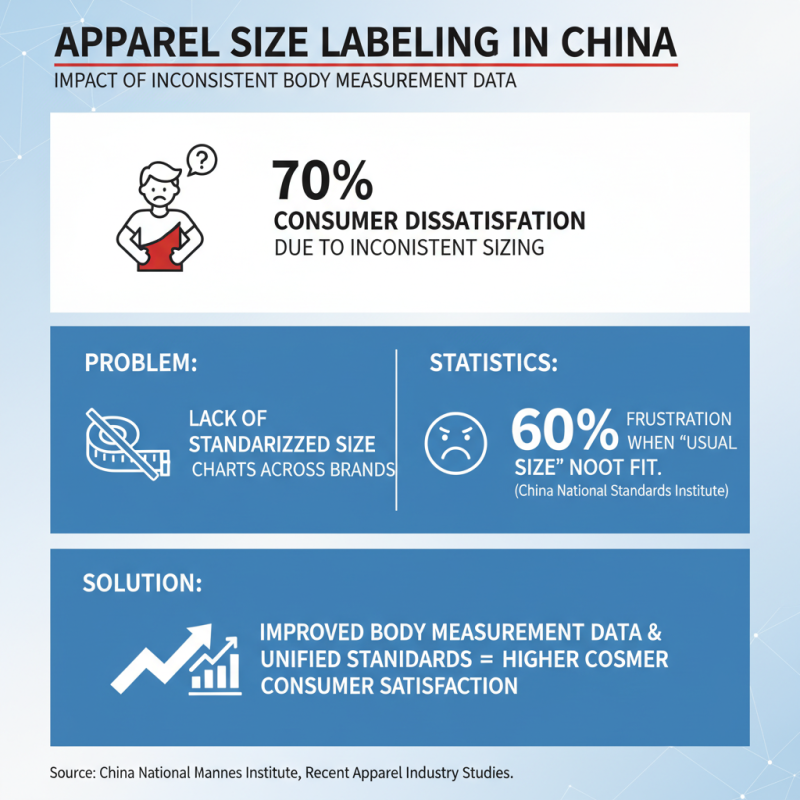
In China, the accuracy of apparel size labeling significantly affects consumer satisfaction. Recent studies indicate that nearly 70% of shoppers report dissatisfaction with clothing sizes, mainly due to inconsistent labeling. This issue arises partly from the lack of standardized size charts across different brands. According to the China National Standards Institute, over 60% of consumers feel frustrated when their usual size does not fit correctly.
Body measurement data plays a crucial role in addressing these labeling discrepancies. In 2022, a survey found that only 30% of manufacturers utilize accurate body measurement data to create size charts. This neglect results in garments that may not cater to the diverse body shapes in the population. For instance, 25% of respondents mentioned needing to purchase multiple sizes to find a proper fit due to this inconsistency in measurements.
The focus on body diversity is growing. The China Textile Industry Federation reports a notable shift towards more inclusive sizing. However, this shift is slow, revealing a gap between consumer expectations and industry practices. As the market evolves, reliance on sophisticated body scanning technology and consumer body data will become increasingly important for brands aiming to enhance fit accuracy.
Consumer Preferences: How Size Labels Affect Purchase Decisions
In China's competitive apparel market, size labels significantly influence consumer choices. With a rising awareness of fit and comfort, shoppers often rely on size labels to make quick decisions. A misleading label can easily lead to frustration. A garment that is labeled as "large" but fits like a medium may deter a customer from purchasing again.
Consumers face an overwhelming array of options, often leading to confusion. In a survey, many shoppers admitted to returning items due to sizing discrepancies. This not only affects their trust in the brand but also impacts their buying behavior. Patterns reveal that inconsistent size labels can push consumers toward brands that prioritize clear and accurate sizing.
Brands need to consider local size preferences and body types. Standardizing labels can help reduce confusion. However, the challenge remains; what might work for one region may not resonate in another. As consumers become more vocal about their experiences, brands should actively seek feedback to enhance their sizing strategies. This ongoing dialogue is essential for fostering loyalty and improving overall satisfaction in the fast-evolving fashion landscape.
Challenges and Innovations in Apparel Sizing within the Chinese Market
The apparel sizing landscape in China is encountering significant challenges. A recent survey showed that over 60% of consumers face difficulties finding their size. This issue arises from inconsistent sizing standards across various brands. Many international brands do not adjust their size charts for the Chinese market, leading to confusion and dissatisfaction among shoppers.
Innovations are reshaping the apparel sizing process. Advanced technologies like 3D body scanning are gaining traction. These tools can analyze a person's unique measurements accurately. Reports indicate a potential 30% reduction in size-related returns when using such technologies. Additionally, machine learning algorithms are being employed to tailor size recommendations for online shoppers. However, despite these advancements, many brands still hesitate to fully embrace these innovations.
Furthermore, cultural factors influence sizing perceptions. In China, there is a tendency to opt for smaller sizes, which complicates the standardization process. A 2021 study highlighted that size preferences can differ significantly regionally. While some regions favor tighter fits, others prefer looser styles. This need for localization complicates the establishment of universal sizing standards. Brands must navigate these regional differences while striving for efficiency in their sizing strategies.