What is the Importance of Apparel Size Labels for Buyers?
Apparel Size Labels play a crucial role in the shopping experience. For buyers, these labels provide clarity and confidence. They guide consumers in selecting the right fit. This is vital for comfort and style. Yet, many shoppers face challenges with size variations across brands.
Understanding Apparel Size Labels helps eliminate confusion. Customers often encounter discrepancies in sizing standards. One brand's medium may differ from another's. This inconsistency affects purchase decisions. It can lead to unnecessary returns and frustrations.
Furthermore, consumers must also acknowledge personal fit preferences. Not everyone prioritizes the same aspects in clothing. Some may prefer a loose fit, while others lean towards a snug style. This subjectivity complicates the interpretation of Apparel Size Labels. Buyers should learn to assess their unique body shapes as well. By doing so, they can navigate the complexities of sizing better and shop more effectively.

Understanding Apparel Size Labels: A Buyer’s Perspective
Understanding apparel size labels is vital for buyers. They directly impact our shopping experiences. Proper label information can save time and reduce frustration. Often, shoppers find discrepancies between sizes. For instance, a medium in one brand may not fit the same in another. This inconsistency can lead to returns and wasted efforts. Clear labeling is essential for informed choices.
Labels communicate dimensions, fit styles, and fabric details. Many buyers overlook these elements. Knowing how to read labels improves shopping efficacy. Pay close attention to international sizing charts. Different regions may have different standards. This helps cut down on confusion.
Tips: When shopping online, check size guides. Measure yourself before selecting a size. If possible, try clothing on in-store when unsure. Remember, sizes can vary widely among brands. Always consider your body shape and fit preferences. Let your shopping be an informed experience, not a gamble.
Importance of Apparel Size Labels for Buyers
This bar chart illustrates the percentage of buyers favoring different apparel sizes based on a recent survey. Understanding these preferences can help brands and retailers make informed decisions about sizing and inventory management.
The Role of Accurate Size Labels in Online Shopping
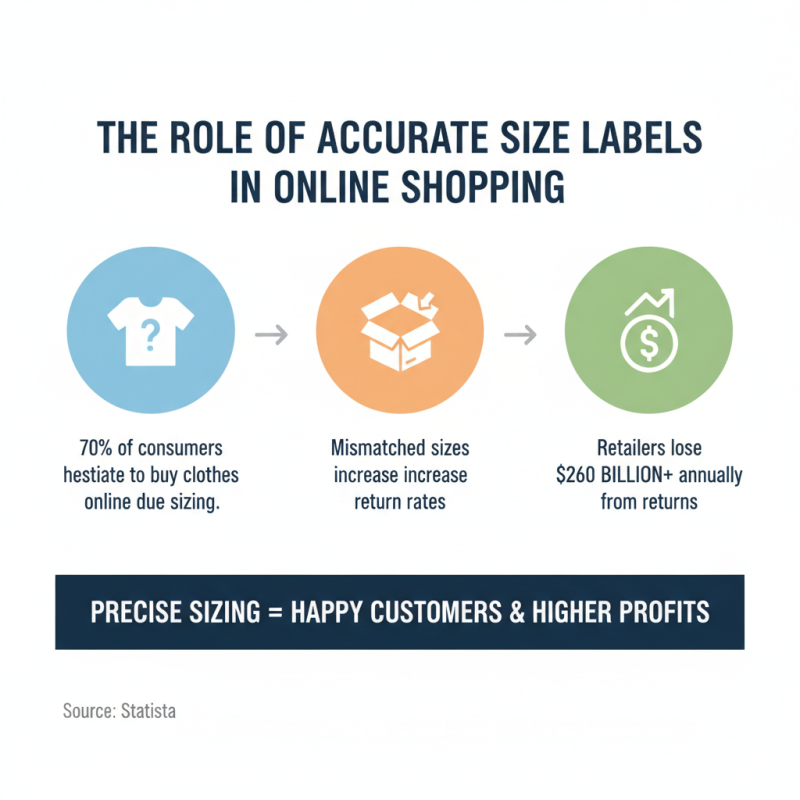
In the realm of online shopping, accurate size labels play a crucial role in enhancing the buying experience. A study by Statista revealed that nearly 70% of consumers hesitate to purchase clothing online due to sizing concerns. Mismatched sizes can lead to increased return rates, which are estimated to cost retailers over $260 billion annually. These statistics highlight the importance of precise sizing for consumer satisfaction and retailer profitability.
Furthermore, size discrepancies can lead to frustration and confusion. A well-established guideline suggests that providing clear measurements can reduce returns by up to 30%. However, many brands still struggle with standardizing sizing charts. Buyers often find themselves guessing their size based on inconsistent labels. This inconsistency can create a gap between customer expectations and reality, causing disappointment.
Reliable sizing information fosters trust between the consumer and retailer. Accurate labels can enhance brand loyalty and drive repeat purchases. However, there remains a need for improvement. Inconsistent sizing practices across the industry can lead to ongoing confusion. Retailers must invest in clear and reliable size guides. By doing so, they can significantly improve the shopping experience and reduce the risk of returns.
Impact of Incorrect Sizing on Customer Satisfaction
Apparel size labels play a crucial role in ensuring customer satisfaction. When shoppers cannot find the right fit, it leads to frustration and disappointment. Incorrect sizing can cause shoppers to return items. This results in a negative shopping experience. Retailers suffer losses and damaged reputations due to inconsistent sizing charts.
Many customers rely heavily on size labels. They are frustrated when a size deemed "medium" varies from brand to brand. Therefore, accurate and clear labeling is essential for ensuring a positive shopping experience. Customers often express dissatisfaction over garments that fit poorly. A simple mistake in sizing can ruin their perception of a brand.
Tips: Always check size charts before purchasing. Each brand may have slightly different measurements. Consider sizing up or down based on reviews. Buyers should read customer feedback for insights into fit. Remember, accurate sizing can enhance your shopping journey.
How Apparel Size Labels Affect Return Rates and Sales
Apparel size labels play a crucial role in the purchasing decisions of buyers. When shoppers find the right size, they are more likely to buy. Conversely, vague sizing can lead to confusion and returned items. Studies show that a significant percentage of returns are caused by improper sizing. This not only affects customer satisfaction but also impacts retailers' bottom lines.
To maximize sales, brands need to standardize size labels. Customers appreciate clear and consistent sizing information. When shoppers understand their options, confidence grows. This can lead to fewer returns and a better shopping experience. Brands should also consider offering fitting guides and virtual try-ons. These tools can help buyers choose the right size, reducing the likelihood of returns.
Tip: Encourage customers to check sizing charts before purchasing. This small step can prevent dissatisfaction.
Tip: Consider implementing feedback systems. Allow customers to share their sizing experiences. This can provide insights into potential sizing issues.
Inconsistent sizing may lead to frustration. Reflecting on customer feedback is essential. Understanding buyer preferences will help brands adjust their sizing strategies.
Navigating Size Variations Across Different Brands and Regions
Navigating size variations can be a challenge for buyers. Different brands often use their own size charts. This inconsistency can confuse shoppers, leading to frustration. One brand's medium could be another brand's small. When ordering online, shoppers miss the chance to try items on. They rely heavily on size labels and charts.
Regional differences add another layer of complexity. Sizes can vary not only by brand but also by country. A US size 6 may not translate to a UK or EU size 6. Buyers need to be vigilant and consult size conversion charts. However, these charts can also be unreliable. A lack of standardized sizing can make the shopping experience daunting, especially for new customers.
Quality control issues further complicate things. Sizes may vary within the same brand based on production runs. This inconsistency can lead to returns and dissatisfaction. Buyers should take the time to read reviews. Fellow shoppers often share insights about sizing fits. Staying informed can make the difference between a successful purchase and a frustrating return.