Leave Your Message

Top 10 Blank Sticker Rolls for Packaging and Labeling Buyers

Choosing the right Blank Sticker Rolls can make everyday packaging clearer, faster, and easier to manage. A neat label on a carton, jar, or shipping pouch helps staff identify products without slowing down the packing line. But a roll that looks suitable online may not fit your printer or dispenser. Small details matter.

This guide compares ten options for buyers who need practical labeling supplies. It considers label size, roll diameter, core size, adhesive type, and compatibility with common printing methods. Some rolls suit quick barcode printing, while others work better for handwritten notes or simple product identification. Check the printer’s specifications before ordering, especially if you use thermal transfer, direct thermal, or inkjet equipment. A mismatch can waste labels and time.

The adhesive deserves equal attention. Labels used on smooth boxes may behave differently on textured jars, cold containers, or surfaces with dust. Test a sample on the actual packaging when possible. It is a modest step. Still, it can prevent peeling edges and frustrating reprints.

There is no universal best roll for every business. A small shop may value flexible quantities, while a busy warehouse may prioritize consistent feeding and dependable supply. The rankings below are intended as a useful starting point, not a substitute for checking dimensions and application needs. Some product details can change, so confirm current specifications with the seller before buying.
Top 10 Blank Sticker Rolls for Packaging and Labeling Buyers

What Blank Sticker Rolls Are and How They Support Packaging and Labeling

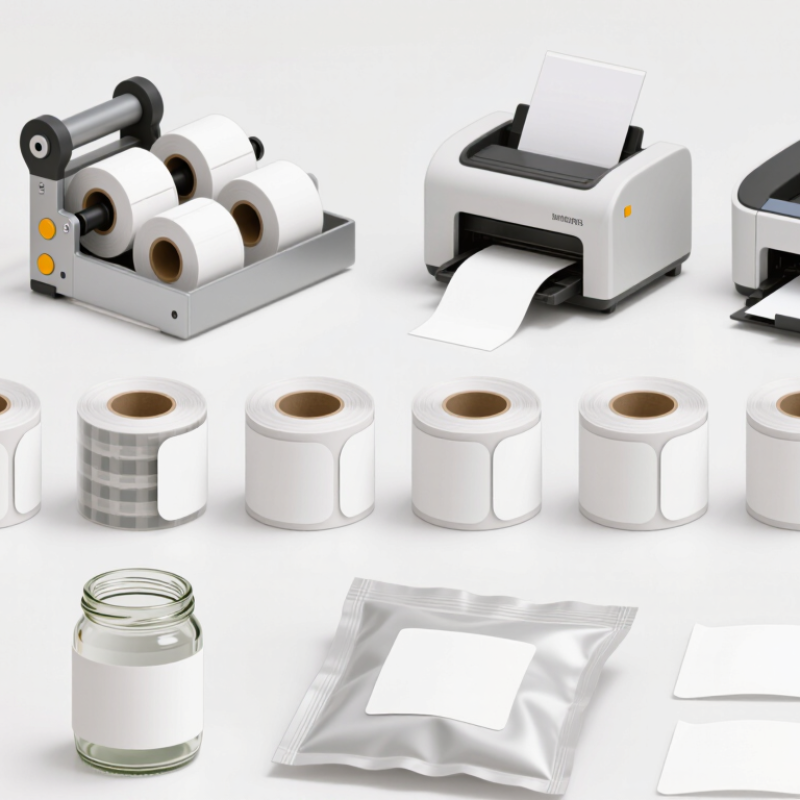
Blank sticker rolls are continuous lengths of label material wound around a core, with individual stickers separated by gaps or cut edges. They usually include a printable face, adhesive backing, and release liner that lets each label peel cleanly. Unlike preprinted labels, blank rolls let businesses add changing details near the point of packing. A team might print a product code, batch date, handling note, or shipping address as orders are prepared. This flexibility helps when packaging changes often or inventory comes in small runs. There is less need to store multiple preprinted versions.

The roll must match both the printer and the package surface. Check label width, core diameter, roll direction, and sensor gap; these details affect feeding and alignment. Direct thermal labels suit short-lived information, while thermal transfer can offer greater durability, depending on the label face and ribbon. Adhesive also behaves differently on glass, corrugated cartons, and chilled containers. Dust, condensation, or curved surfaces may weaken the bond. A roll looks simple. Not always. Before buying in quantity, test a few labels on the actual package and put them through normal handling. This may reveal curled corners or smudged print. Blank rolls are useful, but they cannot fix poor printer settings or an unsuitable label construction.
Which Materials and Adhesives Suit Different Labeling Conditions

Choosing among the top 10 blank sticker rolls starts with the surface and environment. Uncoated paper is economical and easy to write on, but moisture can blur ink or weaken the label. For chilled drinks or damp cartons, film materials such as polypropylene resist water better. Use polyester when labels may face abrasion or temperature changes. The right choice depends on the full journey, not just the packing bench.

Adhesive matters just as much. Permanent acrylic adhesive suits clean, dry boxes and routine shipping. Removable adhesive can help with reusable containers, though residue and edge lifting still need testing. For freezer storage, select an adhesive rated for low-temperature application and service; a roll that sticks at room temperature may fail on a frosty tub. Conditions vary. Dust, condensation, and textured cardboard can all reduce contact.

Before ordering large quantities, apply samples to the actual packaging and hold them under realistic conditions. Check corners after refrigeration, rub printed areas with a dry cloth, and see whether labels peel cleanly when required. That matters. A small trial often catches problems a specification sheet cannot. We sometimes focus too much on material names; surface preparation and application pressure can be just as important.

Top 10 Blank Sticker Rolls for Packaging and Labeling Buyers — Which Materials and Adhesives Suit Different Labeling Conditions
Material and adhesive guidance for common packaging and labeling environments. Actual performance depends on the adhesive formulation, surface, application temperature, and exposure conditions.
Rank Face Material Typical Adhesive Best-Suited Conditions Common Uses Key Considerations
1 Direct thermal paper Permanent acrylic or rubber-based adhesive Short-life labels applied to clean, dry cartons and packaging at ordinary indoor temperatures Shipping labels, receipts, short-term inventory and logistics labels Image-forming coating needs no ribbon, but can darken or fade with heat, sunlight, abrasion, oils, or prolonged storage.
2 Thermal-transfer coated paper Permanent acrylic adhesive General-purpose indoor labeling where a printed image should last longer than a typical direct-thermal image Product identification, carton labels, warehouse and retail labels Requires a compatible thermal-transfer ribbon. Paper may tear or lose legibility when exposed to moisture or heavy abrasion.
3 Coated semi-gloss paper Permanent acrylic adhesive Dry, indoor applications needing a smooth surface for crisp text and graphics Retail packaging, product labels, promotional packaging Offers good print presentation, but is less suitable than film for wet, oily, or frequently handled environments.
4 Uncoated kraft paper Permanent rubber-based or acrylic adhesive Dry packaging surfaces where a natural paper appearance is preferred Paper bags, boxes, craft packaging, simple product identification Porous, textured kraft can affect print sharpness and adhesive contact. Test on recycled or uneven surfaces before use.
5 White polypropylene (PP) film Permanent acrylic adhesive Moisture-prone handling and applications requiring a flexible, tear-resistant label Bottles, personal-care products, food and beverage packaging Film resists water better than paper, but adhesion still depends on surface energy, cleanliness, curvature, and application conditions.
6 Clear polypropylene (PP) film Clear permanent acrylic adhesive Packaging where a transparent “no-label” appearance is desired Clear bottles and jars, cosmetic and beverage packaging Clear adhesive and careful application help reduce visible bubbles and haze. Surface cleanliness is especially important.
7 Polyethylene (PE) film Flexible permanent acrylic adhesive formulated for low-energy surfaces Flexible or squeezable containers and some low-surface-energy plastic packaging Squeeze bottles, flexible pouches, household and personal-care containers Conformability helps on squeezable packaging. Confirm compatibility with the specific plastic, since additives and treatments vary.
8 Polyester (PET) film Permanent acrylic adhesive Applications needing a dimensionally stable, durable film label Equipment identification, durable product labels, asset and compliance labeling PET resists tearing and dimensional change, but the label’s chemical, heat, and outdoor performance depends on the full label construction.
9 Removable paper Removable acrylic adhesive Temporary labeling on smooth surfaces where clean removal is required Price labels, temporary promotions, reusable containers and short-term organization Removal behavior can change with dwell time, temperature, surface finish, and exposure to sunlight or moisture. Test before use.
10 Freezer-grade paper or film Low-temperature permanent acrylic adhesive Cold storage and refrigerated or frozen packaging, when applied within the adhesive’s specified application-temperature range Frozen food cartons, chilled products, cold-chain identification Cold-service suitability does not guarantee application to a frosty or wet surface. Check the product data sheet for application and service limits.

How to Compare the Top 10 Blank Sticker Rolls by Size, Finish, and Use

Choosing among ten blank sticker rolls starts with the label’s real job. For small jars, 25–40 mm circles leave room for the product; 50–76 mm rectangles suit cartons and storage bins. Match core diameter to the dispenser, too. A roll that fits the label but not the applicator causes avoidable downtime. Grand View Research valued the global labels market at about $49.9 billion in 2023, reflecting broad demand across packaged goods. That scale makes a small specification error worth catching early.

Compare finish and adhesive against the surface. Matte paper is easy to write on and reduces glare, while gloss can make colored packaging look sharper. Thermal labels suit short-lived shipping information; coated paper or film handles moisture better. In a sample test, chill a labeled container, rub the print, and check whether the edges lift. It is a simple test, but easy to skip. eMarketer estimated worldwide retail e-commerce sales at $5.8 trillion in 2023, a useful indicator of the volume moving through labeled parcels. Buyers should compare roll length, label spacing, and winding direction alongside size and finish. The cheapest roll may waste time if it jams or peels unevenly. I would still question any choice made from a specification sheet alone; actual surfaces behave differently.

Which Printer and Core Specifications Buyers Should Check

When comparing blank sticker rolls, match the roll to the printer before judging price or label finish. Check whether the machine uses direct thermal or thermal-transfer printing. Direct thermal stock needs no ribbon, but heat and sunlight can fade the print. Thermal-transfer setups require a compatible ribbon width and ink side. Small mismatch, messy results.

Measure the printer’s maximum roll diameter and the holder’s core diameter. A roll that looks close may wobble on a narrow spindle or fail to fit the housing. Common core sizes vary, so confirm the equipment manual rather than assuming a standard. Also check label width, gap spacing, and whether the printer detects gaps or black marks. These details affect feeding and cutting. Test a few labels.

Ask for the unwind direction and label orientation, especially when labels must peel toward an applicator. Confirm the backing thickness and adhesive suit the surface: a curved jar, for example, may need a more flexible label than a flat carton. Room temperature matters, too. Cold storage can weaken some adhesives. A short trial roll often reveals jams, curled edges, or sensor errors before a bulk order. It is easy to focus on the sticker face and overlook the core; that is an avoidable, but common, purchasing miss.

How to Match a Sticker Roll to Packaging Needs and Purchase Volume

A blank sticker roll should fit the product, printer, and pace of packing—not just the budget. The U.S. Flexible Packaging Association’s 2023 State of the Industry report valued U.S. flexible-packaging sales at $42.9 billion in 2022, a reminder of the scale and variety of packaging needs. Measure label width, height, core diameter, and maximum roll diameter before ordering. Check whether labels must resist moisture, refrigeration, or scuffing. The wrong adhesive can lift at the corners.

Match the material to the printer: direct thermal suits short-lived labels, while thermal-transfer printing can better handle longer storage or tougher conditions. Confirm the roll’s unwind direction, gap spacing, and printer compatibility with a sample. For volume planning, compare the cost per usable label, not only the roll price. A large order may lower unit cost, but ties up space and cash. A tidy spreadsheet can still miss seasonal demand swings.

Tips: Test one roll on the actual printer and packaging. Note jams, peeling, and print clarity. Then estimate monthly use and reorder lead time. Recheck the estimate after a busy week; real packing speed may differ from the plan.

Top 10 Blank Sticker Rolls for Packaging and Labeling Buyers

Compare common label formats by face area to help match packaging needs and plan roll purchases.

Larger formats provide more space for product details, while smaller labels suit compact packaging and simple identification. These are common format examples, not a ranked list; labels per roll vary with roll length, spacing, core size, and printer requirements. Confirm those specifications and your order volume before purchasing.