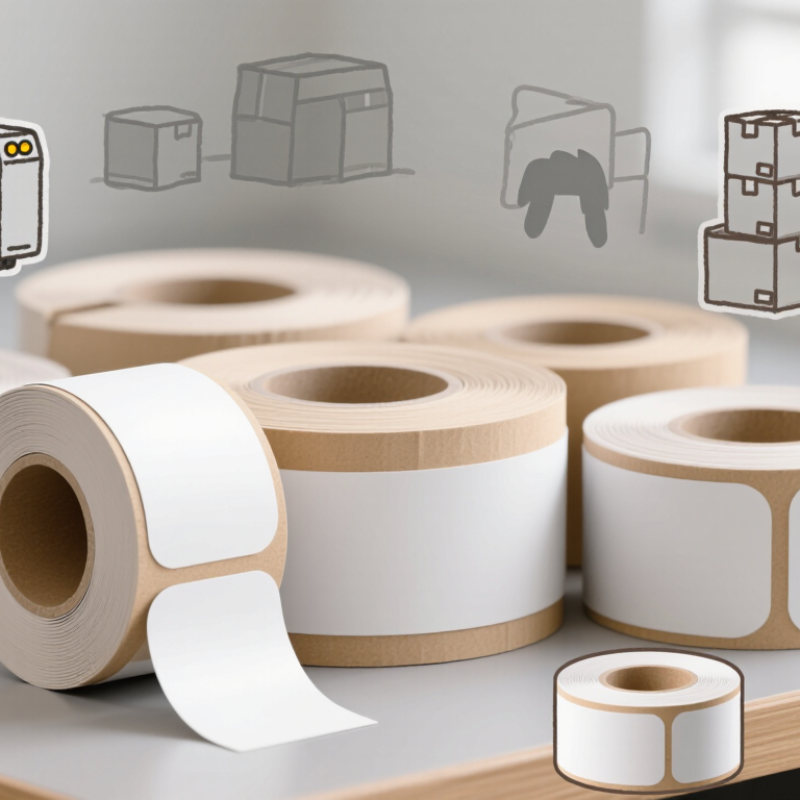
For wholesale buyers, selecting the right Blank Sticker Rolls is a practical supply decision, not a simple price comparison. A roll may look clean in a sample box, yet feed poorly through a thermal printer. Adhesive strength, liner release, core size, winding direction, and roll diameter can change daily production results. Small details matter.
Packaging engineer Daniel Mercer offers a useful reminder: “The best blank roll is the one your workflow barely notices.” This guide applies that idea to the 2026 buying landscape. It examines material consistency, label dimensions, printer compatibility, storage stability, minimum order quantities, and supplier communication. It also considers how quickly a supplier responds when a shipment arrives with uneven edges or loose winding.
Wholesale purchasing is rarely perfect. A low unit cost can hide higher waste. A premium face stock may exceed the needs of ordinary cartons. Buyers must test before committing to large volumes. That step is often skipped. It should not be.
The best Blank Sticker Rolls should run smoothly, separate cleanly, and remain readable after handling. They should also match the buyer’s equipment and operating environment. A cold warehouse, dusty packing line, or humid storage room can expose weaknesses quickly. This overview compares practical options for distributors, manufacturers, retailers, and packaging teams. The aim is not to name one universal winner. It is to identify dependable choices, explain their trade-offs, and help buyers make a decision they can defend with real production evidence.
Blank sticker rolls are not interchangeable in wholesale work. Their material, adhesive, and print method must match the application. Choosing by price alone often creates waste.
Direct thermal rolls suit shipping labels, temporary inventory tags, and short-term warehouse identification. They print without ribbons, which simplifies routine packing. However, heat and sunlight can darken the surface over time.
Thermal transfer rolls offer stronger durability for shelving labels, outdoor containers, and long storage periods. They require compatible ribbons, but the printed image usually lasts longer.
Paper rolls remain practical for cartons, price labels, and office filing. They are cost-effective and easy to write on. For moisture, abrasion, or repeated handling, polypropylene and polyester rolls provide better resistance.
Clear film creates a clean “no-label” appearance on glass or smooth packaging. White film improves contrast on colored surfaces.
Removable adhesive works well for temporary promotions and movable bins, while permanent adhesive supports long-term identification.
Print equipment also matters. Inkjet-compatible rolls may need a coated face for sharp color reproduction. Laser-compatible stock should tolerate heat without curling.
I recommend testing a small roll before placing a wholesale order. Check core diameter, roll width, winding direction, label spacing, and storage humidity.
I have seen technically suitable labels fail because the core did not fit the dispenser. That mistake is easy to miss.
No choice is perfect. A small sample may reveal adhesive weakness, poor ink anchoring, or uneven feeding before the larger shipment arrives.
Material selection should match the product, printer, and application surface. Coated paper is economical and prints with sharp text, barcodes, and simple graphics. Polypropylene resists moisture and tearing, making it useful for chilled products or storage areas. Polyester offers stronger durability, especially where labels face rubbing, heat, or frequent handling. Clear film creates a printed-on-the-container appearance, but small alignment errors become obvious.
Adhesive choice deserves careful testing. Permanent adhesive suits cartons, jars, and shipping packages that should not be relabeled. Removable adhesive works better for temporary pricing, promotions, or reusable containers. Check adhesion after refrigeration, heat exposure, and several hours on dusty surfaces. Roll size also affects productivity. Confirm label width, height, core diameter, outer roll diameter, and winding direction before ordering. A roll that fits the printer incorrectly can waste an entire production run. It happens.
Tips: Order samples before wholesale purchasing. Test print quality, peel strength, liner release, and edge curling. Compare matte, gloss, and semi-gloss finishes under your actual lighting. Matte reduces glare and improves handwriting. Gloss gives colors more visual impact. Direct thermal rolls simplify printing, but their images may fade with heat or sunlight. Thermal-transfer materials usually provide better long-term stability, though they require compatible ribbons. The lowest unit price is tempting. It is not always the lowest real cost. Recheck specifications with your printer operator before approval.
Quality starts with the face stock, adhesive, and release liner. A smooth, even surface reduces pinholes, edge lift, and fuzzy text. Grand View Research valued the global self-adhesive labels market at about USD 53.9 billion in 2023. Its forecast also indicates steady growth through 2030. This growth raises buyer expectations for dependable blank rolls.
Compatibility must be tested, not guessed. Check core size, roll diameter, winding direction, and printer heat settings. A roll may fit one thermal printer but jam another.
For inkjet use, confirm coating absorption and drying speed. For laser printing, test toner adhesion after bending. FINAT industry surveys show that print quality and material performance remain major converter concerns. Still, laboratory results can differ from warehouse conditions. Humidity changes everything.
Order trial rolls before bulk purchasing. Print small text, solid blocks, and barcodes. Rub the surface after curing. Leave samples overnight. Measure contrast with a verifier, not only your eyes.
Also inspect the first and last meters of each roll. Defects often hide there. Ask suppliers for basis weight, adhesive type, liner thickness, and storage limits.
I would also record printer speed and temperature during testing. It feels excessive, but it prevents expensive rework.
One weakness remains: supplier data sheets may not reflect real transport or storage conditions. Test again after heat, cold, and compression exposure.
Wholesale buyers should compare landed cost, not only the quoted roll price. Ask for pricing at several volume levels, such as 100, 500, and 1,000 rolls. A low unit price may hide higher freight, packing, or setup charges. Request a written quotation with material, adhesive type, roll length, core size, and delivery terms clearly listed. Small details matter.
Minimum order quantities can affect cash flow quickly. A supplier offering 10,000 rolls may seem competitive, but that inventory could remain unsold for months. Smaller trial orders are safer for testing demand, print performance, and storage conditions. Confirm whether mixed sizes count toward the MOQ. Some suppliers allow this. Others do not.
Supplier selection requires evidence, not confident promises. Request recent samples from the same production line used for wholesale orders. Check edge alignment, winding tension, liner release, and adhesive performance on your target surface. Ask how they control batch consistency and handle damaged rolls. Independent quality records can help, but they should be current. I would also verify lead times during busy seasons. Suppliers may quote ideal schedules. Real production can differ. A practical comparison sheet should include price, MOQ, sample results, payment terms, replacement policy, and communication speed. One overlooked issue is storage guidance. Heat and humidity can change adhesive behavior before the rolls reach customers.
2026 Best Blank Sticker Rolls for Wholesale Buyers
Storage determines whether a blank sticker roll performs well months after purchase. Smithers’ The Future of the Global Printed Labels Market to 2028 forecasts continued growth in label demand, increasing pressure on distributors to protect inventory quality. Store rolls horizontally, away from sunlight, dust, and heating vents. Keep the room stable, ideally around 18–25°C with moderate humidity. Avoid damp warehouses. Moisture can soften paper faces and weaken adhesive edges.
Customization starts before printing. Confirm core diameter, roll width, winding direction, face material, adhesive type, and compatible printer technology. A small difference can create feeding errors. Thermal transfer, direct thermal, and inkjet applications require different surface treatments. Ask for production samples, not only specification sheets. Test barcode sharpness, peel strength, and liner release on the actual packaging. It takes time, but rejected rolls cost more than sampling.
Purchasing decisions should include total usable output, not just unit price. Compare meters per roll, defect tolerance, packaging protection, lead time, and replacement terms. FINAT’s European label market reports show demand can fluctuate across sectors, so excessive stock may become a quiet cash drain. I have seen buyers overestimate seasonal demand. It looked efficient. It was not. A smaller trial order, followed by documented feedback, may offer better control than a large discount. Supplier audits, batch records, and clear storage instructions also strengthen purchasing reliability.
| Sticker Type | Common Materials | Typical Roll Sizes | Surface and Printability | Recommended Uses | Storage Conditions | Customization Options | Wholesale Purchasing Considerations |
|---|---|---|---|---|---|---|---|
| White Paper | Uncoated or coated paper with a paper release liner |
Width: 25–150 mm Length: 10–50 m |
Coated paper supports clearer inkjet, laser, and thermal-transfer printing. Uncoated paper is suitable for basic writing and stamping. | Inventory labels, address labels, organization stickers, short-term packaging, and office use | Keep dry and flat at approximately 15–25°C with relative humidity around 40–60%. Avoid direct sunlight and condensation. | Custom width, core diameter, winding direction, perforation, adhesive strength, and printed registration marks | Usually economical for high-volume orders. Confirm roll length, label count, core size, and compatibility with the buyer’s printer. |
| Direct Thermal | Heat-sensitive paper with a compatible adhesive and release liner |
Width: 25–110 mm Length: 10–30 m |
Prints without ribbon when used with a direct-thermal printer. Sensitive to heat, friction, light, and some chemicals. | Shipping labels, receipts, temporary logistics labels, queue tickets, and short-term barcode applications | Store in a cool, dry, dark place. Avoid prolonged exposure above normal room temperature, sunlight, plasticizers, and chemical vapors. | Custom label dimensions, adhesive grade, black-mark position, gap or continuous format, and winding direction | Check printer width, sensor type, maximum roll diameter, core size, and expected label life before placing a large order. |
| White Polypropylene | Polypropylene film with permanent or removable adhesive |
Width: 25–150 mm Length: 10–50 m |
Moisture-resistant and tear-resistant. Suitable for thermal-transfer, inkjet, and selected laser printing systems. | Product labels, bathroom and kitchen packaging, outdoor-covered applications, and reusable containers | Store in original packaging at 15–25°C. Protect from humidity, dust, direct sunlight, and excessive pressure on the roll edges. | Gloss or matte finish, white or clear film, permanent or removable adhesive, custom die-cut shape, and protective overlamination | More durable than paper but generally costs more. Verify ink adhesion, drying time, edge curl, and resistance requirements. |
| Clear Film | Transparent polypropylene or polyester film with a clear release liner |
Width: 25–150 mm Length: 10–50 m |
Creates a “no-label” appearance. Requires suitable white-ink capability or a compatible printing process for opaque graphics. | Clear packaging, glass containers, cosmetic packaging, product windows, and minimalist branding applications | Keep rolls clean and protected from dust. Maintain stable temperature and humidity to reduce curl, blocking, and static-related handling issues. | Clear or frosted finish, permanent or removable adhesive, custom shape, white underprint, and front or reverse printing | Request print samples before bulk purchasing. Confirm transparency, adhesive visibility, liner release force, and die-cut accuracy. |
| Removable Paper | Paper face stock with low-tack or removable adhesive |
Width: 25–150 mm Length: 10–50 m |
Available in matte or semi-gloss finishes. Designed for clean removal from selected smooth surfaces. | Temporary price labels, event identification, retail promotions, storage bins, and rental equipment | Store away from heat and high humidity. Test adhesion after storage because tack can change with temperature and surface conditions. | Low-tack adhesive, custom size, corner radius, perforation, color printing, and sequential numbering | “Removable” performance depends on surface, dwell time, temperature, and coating. Approve samples on the actual application surface. |
| Freezer-Grade | Cold-resistant paper or film with low-temperature adhesive |
Width: 25–150 mm Length: 10–40 m |
Designed for cold storage and selected frozen applications. Film versions offer better moisture resistance than paper. | Frozen foods, laboratory samples, refrigerated inventory, cold-chain packaging, and specimen containers | Store sealed in a dry environment. Avoid moving rolls directly from cold storage to warm conditions until condensation has dissipated. | Low-temperature adhesive, custom die-cutting, moisture-resistant face stock, barcode printing, and colored identification zones | Confirm the minimum application temperature, service temperature, surface energy, and required label life under condensation or frost. |
| Colored Paper | Dyed or pigmented paper with permanent or removable adhesive |
Width: 25–100 mm Length: 10–40 m |
Available in common colors for visual coding. Dark colors may reduce barcode contrast and require testing. | Warehouse organization, color-coded inventory, classroom materials, promotional packaging, and event management | Protect from moisture, strong light, and rubbing that may transfer color. Store rolls vertically or as recommended by the converter. | Custom color matching, matte or gloss coating, adhesive selection, die-cut shape, and printed text or symbols | Specify color tolerance, sample approval method, minimum order quantity, roll-to-roll color consistency, and barcode contrast needs. |
| Recycled Paper | Paper containing post-consumer or pre-consumer recycled fiber |
Width: 25–150 mm Length: 10–50 m |
Usually matte with a natural appearance. Surface smoothness and whiteness can vary by recycled content and coating. | Eco-focused packaging, internal organization, shipment identification, and short-to-medium-term labeling | Keep away from moisture and excessive heat. Use first-in, first-out rotation to maintain consistent converting and printing performance. | Specified recycled content, natural or bright white shade, water-based coating, custom adhesive, and custom core size | Ask for documented recycled-content information where required. Compare opacity, caliper, print quality, and adhesive performance with standard paper. |
| Tamper-Evident Film | Destructible film or security film with permanent adhesive |
Width: 25–100 mm Length: 10–30 m |
Designed to show damage, fragmentation, or a visible message when removal is attempted. Not intended for ordinary repositioning. | Warranty seals, packaging security, asset control, authentication labels, and access-restricted equipment | Store in sealed packaging at stable room temperature. Protect from dust, excessive humidity, and pressure that may affect release or adhesive behavior. | Custom security pattern, serial numbering, microtext, variable data, holographic effect, and custom die-cut shape | Define the required evidence of tampering, surface type, application temperature, and security level. Request controlled samples before production. |
| Eco-Friendly Film | Selected recyclable, bio-based, or reduced-material film constructions |
Width: 25–150 mm Length: 10–50 m |
Performance varies by film composition and coating. Confirm recyclability or bio-based content claims with supporting documentation. | Packaging identification, personal-care products, household goods, and sustainability-focused product lines | Follow the material supplier’s temperature and humidity guidance. Prevent exposure to heat or moisture that could change film dimensions. | Material composition, adhesive type, matte or gloss finish, custom shape, recycled content, and low-ink coverage design | Compare end-of-life compatibility, certification requirements, converting yield, print performance, and total delivered cost rather than unit price alone. |
| Thermal-Transfer Compatible | Paper or synthetic face stock engineered for ribbon-based printing |
Width: 25–150 mm Length: 10–50 m |
Supports resin, wax, or wax-resin ribbons depending on the face material and durability requirements. | Barcodes, product identification, shelf labels, asset tags, and long-life logistics labels | Store in original packaging under stable room conditions. Keep away from dust and avoid crushing the roll edges. | Paper or film face stock, ribbon-specific coating, adhesive selection, sensor marks, perforation, and variable-data printing | Match the face stock and ribbon type. Test print darkness, barcode readability, abrasion resistance, and adhesion after application. |
| Industrial High-Tack | Coated paper or synthetic film with aggressive permanent adhesive |
Width: 25–150 mm Length: 10–50 m |
Designed for challenging substrates such as textured surfaces, plastics, painted metal, or corrugated packaging. | Equipment identification, warehouse assets, shipping cartons, cables, tools, and durable product marking | Store at stable room temperature and moderate humidity. Keep adhesive surfaces protected from dust and premature contact. | Adhesive grade, chemical-resistant face stock, custom shape, sequential numbering, overlamination, and barcode or QR-code printing | Evaluate surface energy, application temperature, dwell time, removal requirements, and chemical or abrasion exposure before bulk purchasing. |
| Custom Die-Cut Roll | Paper, polypropylene, polyester, vinyl, or other selected face materials |
Custom width and length Common core: 25 or 76 mm |
Supports custom shapes, logos, symbols, and variable formats. Print and cutting tolerances should be specified in advance. | Product packaging, promotional campaigns, retail labeling, identification systems, and specialized components | Protect finished rolls from humidity, heat, dust, and edge impact. Store upright or according to the converter’s packing instructions. | Shape, size, corner radius, gap, core, winding direction, adhesive, finish, colors, numbering, and perforation | Provide artwork in a production-ready format and approve a physical proof. Confirm tooling cost, repeat-order terms, tolerances, and lead time. |