- Home
- Packing Solutions
- About Us
- News & Blogs
- Videos
- Blog
- Contact Us
Leave Your Message



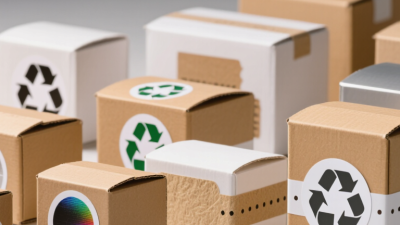
Choosing the best sticker for a packaging box depends on what the box must endure. A label for a dry, lightweight parcel may need little more than a clean surface and dependable adhesive. A box exposed to moisture, cold storage, or frequent handling needs a tougher option. It depends. The right choice should suit the journey, not just the product photo.
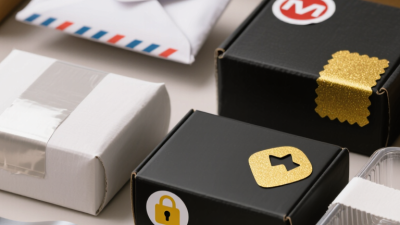
Stickers For Packaging Box options commonly include paper labels for simple branding and polypropylene film labels for better resistance to scuffs and moisture. Neither material is automatically best. Paper can offer a natural, textured look, while film often stays clearer after handling. Adhesive matters just as much: a strong permanent adhesive can hold on corrugated cardboard, but a removable one may suit temporary marking. Test a sample on the actual box, especially if its surface is dusty, recycled, or uneven. Small details matter.
Consider the box’s color, storage conditions, label size, and printing method before ordering a large batch. Check supplier specifications for temperature limits and water resistance rather than relying on broad claims. Also ask whether the label and box can be processed together through local recycling systems; compatibility varies. A glossy finish may catch the eye, but it can make small text harder to read under bright lights. I might still choose it for a short campaign, though not without checking a real sample first. The sections ahead compare common sticker types, adhesives, finishes, and practical selection factors, so you can make a choice that balances appearance, durability, and cost.
What Type of Sticker Is Best for Packaging Boxes?
Key Factors for Choosing a Packaging Box Sticker
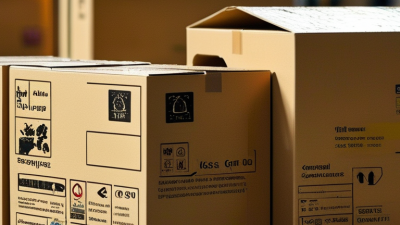
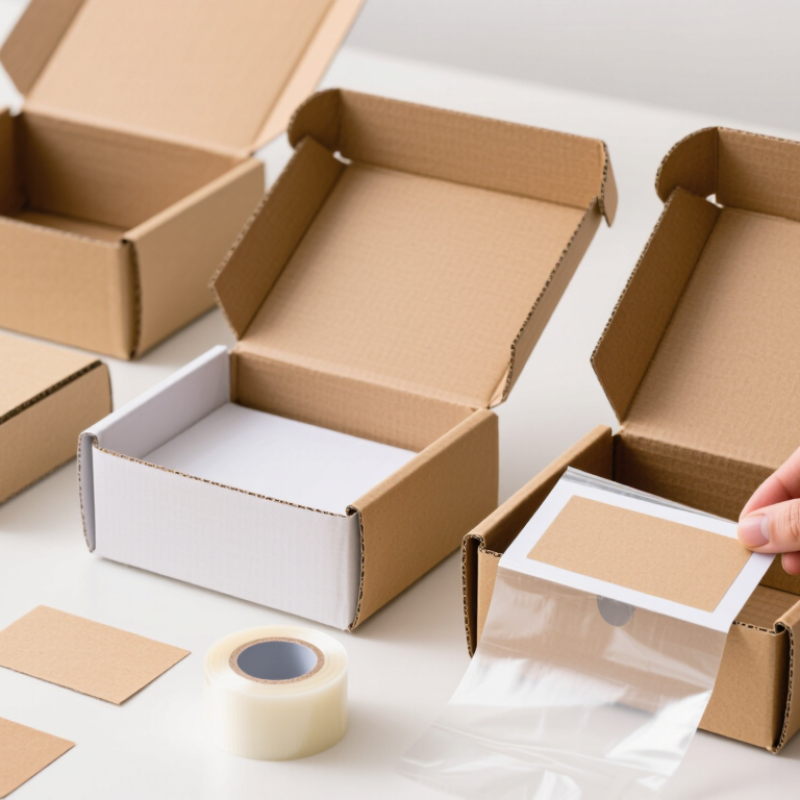
The right sticker depends on the box surface, shipping conditions, and the information it must carry. For rough corrugated board, a strong permanent adhesive usually grips better than a removable one. Smooth, coated boxes may need a different adhesive. Test a sample on the actual box; dust, recycled fibers, and cold storage can change how well it sticks. Small detail, big difference.
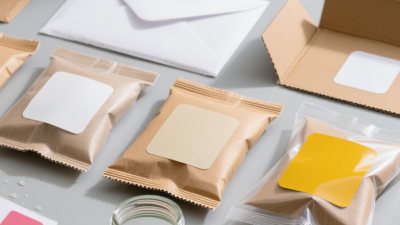
Choose a material that suits the journey. Paper labels work well for dry indoor handling and are easy to print. Film labels resist moisture and scuffing, useful when boxes face damp warehouses or repeated handling. The U.S. EPA’s 2018 Advancing Sustainable Materials Management report estimated that containers and packaging generated 82.2 million tons of U.S. municipal solid waste. That figure makes material choices worth considering, but a recyclable sticker does not automatically make a whole package recyclable.
Check print contrast, label size, and placement before ordering a large batch. Black text on a light label is often easier to scan than pale text on kraft board. Keep barcodes away from seams and curved edges. A perfect-looking label can still fail after condensation or abrasion. That part is easy to overlook. Test adhesion, legibility, and removal on packed boxes—not just on a clean desk.
| Sticker Type | Typical Material | Best Suited For | Key Advantages | Things to Consider |
|---|---|---|---|---|
| Paper stickers | Coated or uncoated paper with a pressure-sensitive adhesive | Dry, indoor shipping boxes, product labels, and short-term packaging | Usually economical; easy to print; available in matte, gloss, and kraft-style finishes | Can tear or wrinkle when wet; performance depends on the paper, adhesive, and box surface |
| BOPP / PP film stickers | Polypropylene film, often supplied in white, clear, or metallic finishes | Boxes needing better resistance to moisture, scuffing, or handling | More water-resistant and tear-resistant than ordinary paper labels; flexible and lightweight | Choose an adhesive suited to corrugated cardboard; film recyclability depends on local systems and construction |
| Polyester (PET) stickers | Polyester film, typically selected for durability | Longer-lasting labels, demanding handling conditions, or durable identification | Strong, dimensionally stable, and resistant to moisture and many common forms of abrasion | Often more than needed for standard shipping boxes; verify adhesion and end-of-life compatibility |
| Kraft paper stickers | Brown paper with a natural or recycled-paper appearance | Uncoated kraft boxes, handmade goods, and packaging where a paper look is preferred | Coordinates visually with kraft packaging and can be easy to write on, depending on the finish | Not inherently waterproof; color and texture can affect print contrast and appearance |
| Removable paper or film stickers | Paper or film paired with a removable adhesive | Temporary markings, retail presentation, or labels intended to come off after use | Designed for easier removal than permanent labels under suitable conditions | Removal results vary with the box coating, surface age, temperature, and time in place; test first |
| Tamper-evident stickers | Destructible paper or film, or a label designed to leave a visible mark when removed | Seals across box openings where evidence of opening is useful | Can show signs of lifting, removal, or disturbance when correctly specified and applied | Not a substitute for secure packaging; performance depends on the seal design and box surface |
Quick guidance: For most dry, indoor shipping boxes, a paper sticker is a practical starting point. Choose a film label when moisture or scuff resistance matters, and select the adhesive for the box surface and application conditions. Test the complete label on the actual packaging before ordering in quantity.