Why Understanding Apparel Size Labels is Crucial for Your Clothing Choices
In today's fast-paced fashion industry, understanding Apparel Size Labels has become essential for consumers navigating their clothing choices. According to the Global Data report on the Apparel Market, over 60% of customers have reported purchasing clothing online that did not fit as expected, leading to high return rates and dissatisfaction. This makes it increasingly crucial for buyers to comprehend the sizing systems used across different brands and categories. Misunderstandings regarding these labels can result not only in wasted time but also in diminished confidence in personal style selections.
“The proper understanding of Apparel Size Labels can empower consumers to make informed decisions, reducing reliance on returns and maximizing their satisfaction,” explains Dr. Emily Walsh, a noted expert in textile science and consumer behavior. Her insights highlight the disconnect that often exists between consumer expectations and reality due to inconsistent sizing standards. With the advent of various sizing methodologies—such as standard, vanity, and numeric sizing—consumers are left to decipher a confusing landscape. Thus, being informed about Apparel Size Labels is not just beneficial; it is vital for making confident and successful clothing purchases in an increasingly competitive market.

Importance of Apparel Size Labels in Consumer Decision-Making
Understanding apparel size labels is essential for consumers navigating the complex world of clothing choices. These labels are not merely numbers or letters; they play a significant role in shaping purchasing decisions. As sizing can vary significantly between different manufacturers and regions, misinterpretations can lead to dissatisfaction, resulting in returns and frustration. Consumers armed with knowledge about size labels can approach their shopping experiences with confidence, ensuring that the items they choose fit well and meet their expectations.
Moreover, accurate size labels contribute to the overall sustainability of the fashion industry. When consumers select the correct sizes on their first attempt, it reduces waste generated from returns and exchanges. This conscious decision-making can foster a more mindful approach to shopping, encouraging individuals to invest in quality pieces that suit them rather than succumbing to trends that may not align with their body type. Therefore, understanding apparel size labels is not just a matter of convenience; it is a critical component of informed consumerism in today's fast-paced retail environment.
Impact of Size Variation Across Brands on Fit and Satisfaction
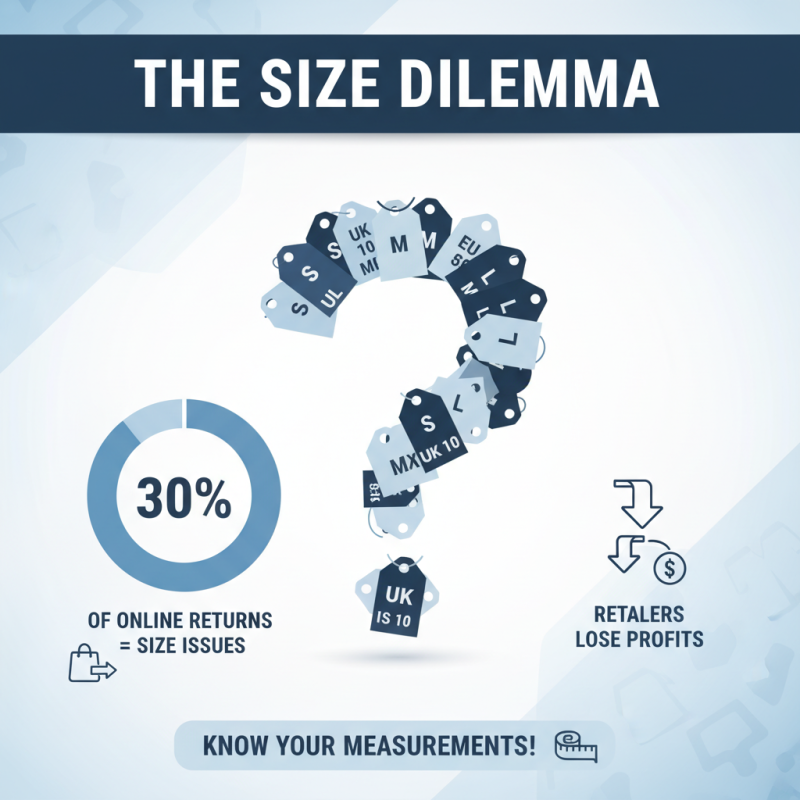
Understanding how apparel size labels vary significantly across different brands is essential for consumers seeking the perfect fit and maximized satisfaction. A recent study highlighted that nearly 70% of shoppers experience frustration when their usual size does not fit as expected due to inconsistent sizing standards (McKinsey & Company, 2023). This inconsistency stems from various factors, such as differences in manufacturing processes, target demographics, and regional sizing conventions. As a result, a size labeled 'M' from one brand may not match the same label from another, leading to confusion and often resulting in returns, which statistics show can account for up to 30% of online purchases in the apparel sector (Statista, 2022).
Moreover, these variations extend beyond mere numbers; they impact consumer confidence and overall shopping experiences. A report from the American Apparel and Footwear Association (2023) found that customers who understand and navigate size variations effectively report higher satisfaction levels and are more likely to make repeat purchases. This understanding can empower consumers to investigate sizing charts, read reviews, and utilize fitting tools provided by retailers. Thus, being informed about these disparities can lead to a more enjoyable shopping experience and reduce the likelihood of purchasing errors, ultimately improving wardrobe satisfaction and minimizing waste in the clothing industry.
Why Understanding Apparel Size Labels is Crucial for Your Clothing Choices
| Brand |
Size Label (S, M, L, etc.) |
Chest Measurement (inches) |
Waist Measurement (inches) |
Hip Measurement (inches) |
Fit Satisfaction (1-5) |
| Brand A |
M |
38 |
30 |
40 |
4 |
| Brand B |
L |
40 |
32 |
42 |
3 |
| Brand C |
S |
34 |
26 |
36 |
5 |
| Brand D |
XL |
42 |
34 |
44 |
2 |
Statistical Insights: The Percentage of Returns Due to Size Issues
Understanding size labels is an essential part of making informed clothing choices, particularly in an industry where sizing inconsistencies are rampant. According to a recent study from the e-commerce sector, about 30% of online clothing returns are attributed to size-related issues. This statistic highlights the challenge consumers face when attempting to select the right fit from a myriad of sizing standards. For retailers, this presents a significant economic burden, with estimated costs of returns impacting profit margins.
To navigate this sizing dilemma, shoppers can benefit from a few practical tips. First, always consult size charts provided by the retailer, as these can give insights into measurements that may differ from one brand to another. Secondly, reading customer reviews that mention fit can provide real-life insights, helping you gauge whether an item runs large, small, or true to size. Lastly, consider utilizing online fitting tools and virtual fitting rooms offered by many retailers; these technologies are designed to assist buyers in finding the best fit based on their personal measurements.
Equipped with these strategies, consumers can make more informed choices and reduce the likelihood of needing to return items due to size discrepancies. Reducing returns not only enhances the shopping experience but also contributes to a more sustainable fashion industry by minimizing waste associated with product returns.
Understanding Size Standards: The Difference Between US, UK, and EU
Navigating the world of apparel size labels can be daunting, especially with the variations across different regions. The most prominent systems are the US, UK, and EU standards, which frequently lead to confusion for shoppers. For instance, a size 8 in the UK is equivalent to a size 4 in the US, while a size 36 in the EU aligns more closely with a UK size 8. This discrepancy arises from differing measurement systems and cultural approaches to sizing, making it essential for consumers to familiarize themselves with these differences to make informed clothing choices.
Understanding these size standards not only enhances the shopping experience but also promotes better fits and reduces the likelihood of return issues. Consumers should pay attention to specific size charts and conversion guides when purchasing clothing, particularly online where trying on items is not an option. Additionally, various brands may adopt their own sizing conventions, further complicating matters. Therefore, taking the time to understand how sizes translate across markets can lead to greater satisfaction and confidence in one’s clothing selections.
Understanding Apparel Size Labels: US vs UK vs EU
Strategies for Effectively Navigating Size Labels When Shopping Online
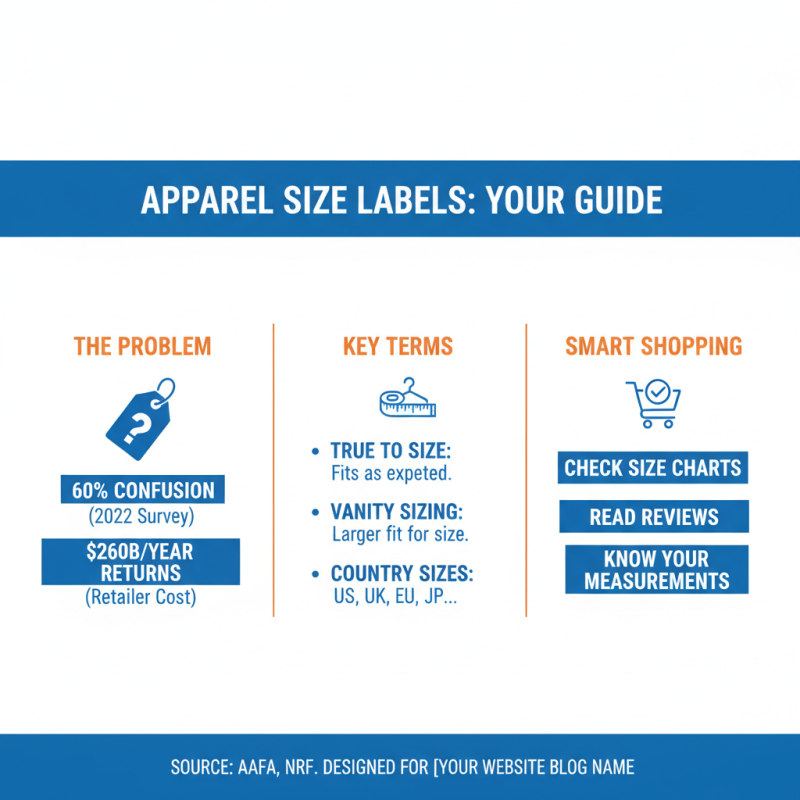
Understanding apparel size labels is essential for making informed clothing choices, especially when shopping online. According to a 2022 survey by the American Apparel and Footwear Association, approximately 60% of consumers reported that they often encounter confusion while interpreting size labels. This confusion can lead to returns, which the National Retail Federation estimates cost retailers over $260 billion annually. To avoid such pitfalls, shoppers need to become familiar with the various sizing systems used by different retailers, including familiar terms like “true to size,” “vanity sizing,” and country-specific measurements.
To effectively navigate size labels, one strategy is to utilize size charts provided by retailers. These charts often include measurements in inches or centimeters for key body areas, allowing for a direct comparison against one’s own measurements. Additionally, reading customer reviews that mention fit can provide insight into whether a particular item runs small, large, or true to size. A recent study revealed that 87% of online shoppers rely on such reviews, underscoring their importance in the decision-making process. Finally, technologies like virtual fitting rooms are emerging, which utilize augmented reality to help consumers visualize how clothing will fit them, potentially reducing the reliance on labels altogether and enhancing the overall shopping experience.