2026 How to Choose the Best Blank Label Rolls for Your Needs?
Choosing the right blank label rolls can greatly impact your business efficiency. As industry expert John Smith, CEO of Label Solutions, emphasizes, "The right labels can transform your operations." This highlights the importance of making informed choices in labeling.
In various sectors, blank label rolls serve multiple purposes. They are used for shipping, inventory, and product labeling, among others. Quality matters. Poor-quality labels can lead to smudging or peeling, causing frustration. Businesses must consider factors like material, adhesive strength, and printer compatibility.
However, many users overlook their unique needs. They often choose labels based on price rather than suitability. Each application requires different specifications. It’s essential to reflect on how your choice impacts your workflow. Making the right decision now can save time and reduce issues later.
Understanding the Different Types of Blank Label Rolls Available
When selecting blank label rolls, understanding the types available is crucial. There are several types, including paper, polyester, and vinyl.
Paper labels are cost-effective and suitable for indoor use. They come in various finishes, such as matte or glossy, adding versatility to your projects. A recent industry report indicated that paper labels account for approximately 50% of the market share.
Polyester is more durable, making it ideal for outdoor applications. This material is resistant to water, chemicals, and extreme temperatures. According to market research, the demand for polyester labels has increased by 15% in recent years. Such a rise reflects the need for longer-lasting labels. However, not all applications may justify the extra cost.
Vinyl labels offer a compromise between cost and durability. They are thicker than paper yet easier to work with than polyester. It's essential to assess your specific needs. Are the labels for short-term use or long-lasting applications? Many businesses struggle to find the balance between quality and cost-effectiveness. Ensure that your choice aligns with your operational requirements.
Identifying Your Specific Labeling Needs and Applications
Identifying your specific labeling needs is crucial when selecting blank label rolls. Start by considering the types of products you will label. For instance, will you need labels for food items, shipping packages, or product identification? Each application has unique requirements, such as adhesive type, durability, and environmental resistance. Analyze your products and their environments to make informed choices.
Next, think about the label size and material. Compatibility with your printer is essential. Many organizations overlook this aspect. If the label does not fit the printer, it can lead to wasted materials and frustration. You might want to test different sizes and finishes. This hands-on approach helps identify what works best for your workflow.
Reflect on the volume of labels needed. Is it a one-time project or a long-term need? Ordering in bulk may save costs but can lead to excess if not planned properly. Understand your consumption trends before committing. It’s easy to underestimate needs, leading to shortages. Assess and adapt as necessary to optimize your labeling process effectively.
2026 How to Choose the Best Blank Label Rolls for Your Needs?
| Label Type |
Material |
Print Method |
Size (inches) |
Adhesive Type |
Applications |
| Direct Thermal |
Paper |
Thermal Printer |
2 x 1 |
Permanent |
Shipping Labels |
| Laser |
Vinyl |
Laser Printer |
4 x 6 |
Removable |
Product Labels |
| Inkjet |
Polyester |
Inkjet Printer |
3 x 2 |
Permanent |
Industrial Labels |
| Self Adhesive |
Paper |
Thermal Transfer |
5 x 3 |
Freezer |
Food Labels |
| Eco-Friendly |
Recycled Paper |
Laser Printer |
2.25 x 4 |
Permanent |
Sustainability Labels |
Evaluating Material Options for Durability and Print Quality
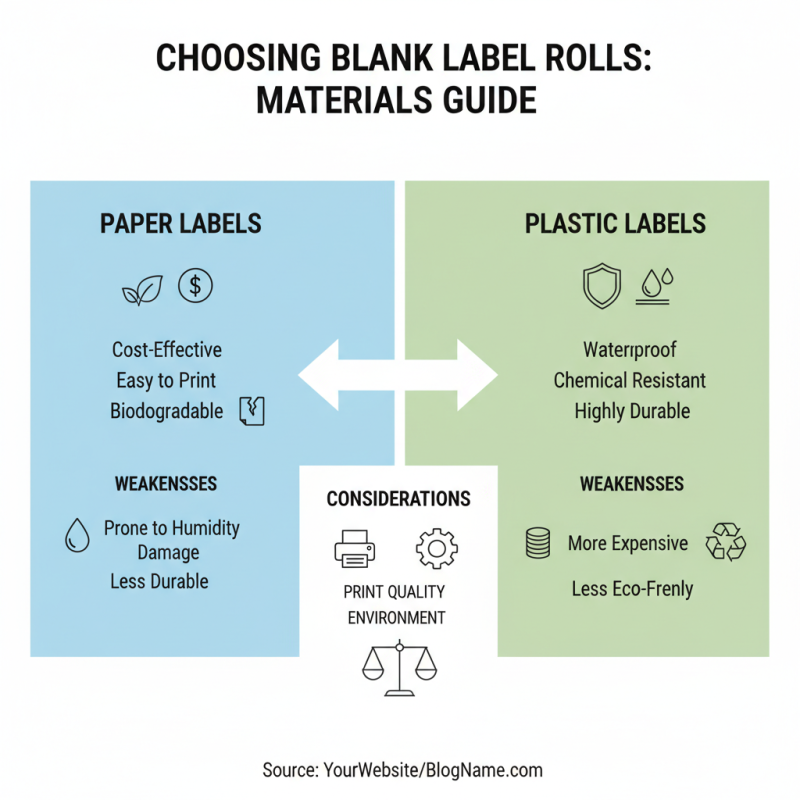
Choosing the right blank label rolls involves careful consideration of materials. Each material has its strengths and weaknesses, affecting durability and print quality. For instance, paper labels are cost-effective but prone to damage in humid conditions. In contrast, plastic labels exhibit waterproof properties but can be more expensive.
When evaluating materials, think about your environment. Are your labels exposed to moisture? If so, a synthetic option may be better. If your labels will be used indoors, paper might suffice.
**Tips:** Test label samples. Check how they hold up under different conditions. Print quality is another factor. Some materials absorb ink better than others. This can affect clarity and color precision. Don't hesitate to experiment and find what suits your specific needs best. Reflect on past experiences with labels to guide your choices.
Considering Printer Compatibility for Optimal Performance
When choosing blank label rolls, printer compatibility is paramount. Many users overlook this crucial aspect, leading to waste and frustration. According to industry reports, 25% of printing issues stem from mismatched label and printer combinations. Understanding your printer's specifications can save time and resources.
Over time, printers have evolved. Some models only work with specific types of labels, such as thermal transfer or direct thermal. Validate your printer’s manual for clarity. Choosing the wrong label can damage your printer or lead to poor print quality. Inspect the core size and label dimensions. These details are vital.
Tips: Always test a few labels before full commitment. This simple step can reveal whether the labels align well with your printer. Consider environmental factors too. Humidity and temperature can impact label adhesion. If you're in a humid environment, opt for waterproof options.
Remember, not all labels perform the same. Some may smudge or fade quickly. Conducting a periodic review of your label choices and printer settings can help maintain optimal performance. Each small adjustment can lead to big improvements in efficiency.
Assessing Cost-Effectiveness and Supplier Reliability
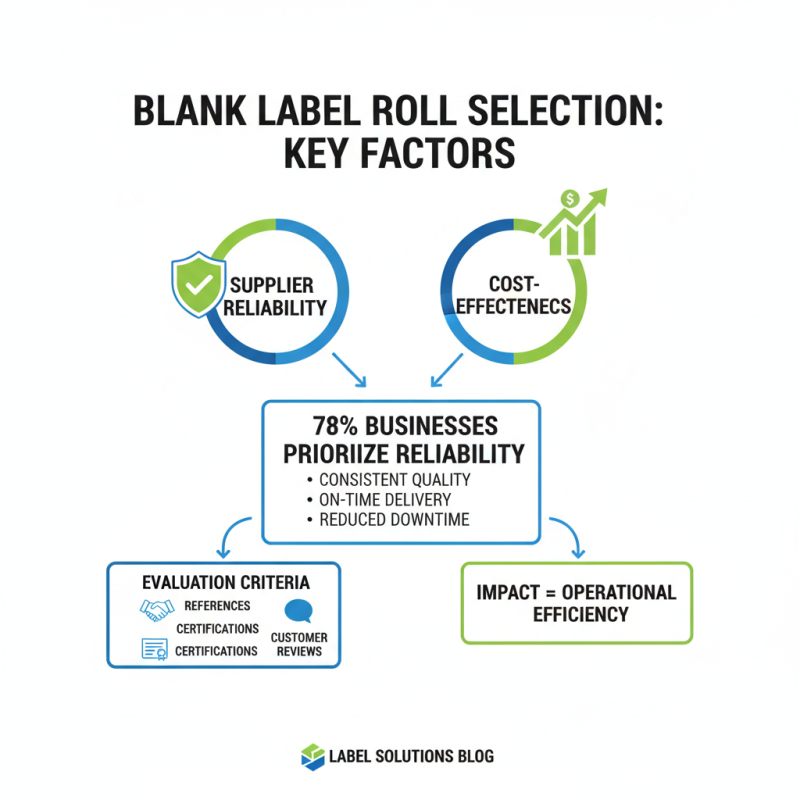
When selecting blank label rolls, assessing supplier reliability and cost-effectiveness is crucial. A recent industry report indicated that 78% of businesses prioritize supplier reliability when choosing labeling solutions. This statistic highlights the significance of partnering with trustworthy suppliers who can consistently deliver high-quality products. Supplier evaluations should include references, certifications, and customer reviews. Consistency impacts operational efficiency significantly.
Cost-effectiveness doesn't simply mean choosing the lowest price. An analysis from the Labeling Standards Association revealed that companies often overlook total cost of ownership. This includes shipping costs, waste rates, and production efficiency. Consideration of these factors can reveal potential long-term savings. A less expensive label may degrade faster, leading to reprinting and increased costs.
Additionally, varying production practices can influence supplier performance. Some suppliers might struggle with high-demand seasons, affecting stock availability. Evaluating production capabilities through visits or audits can provide more insight. Understanding the nuances of supplier reliability is essential to avoid pitfalls. Companies might find themselves at a standstill if they underestimate these aspects. By focusing on both cost and reliability, businesses can better align their needs with viable label roll options.